

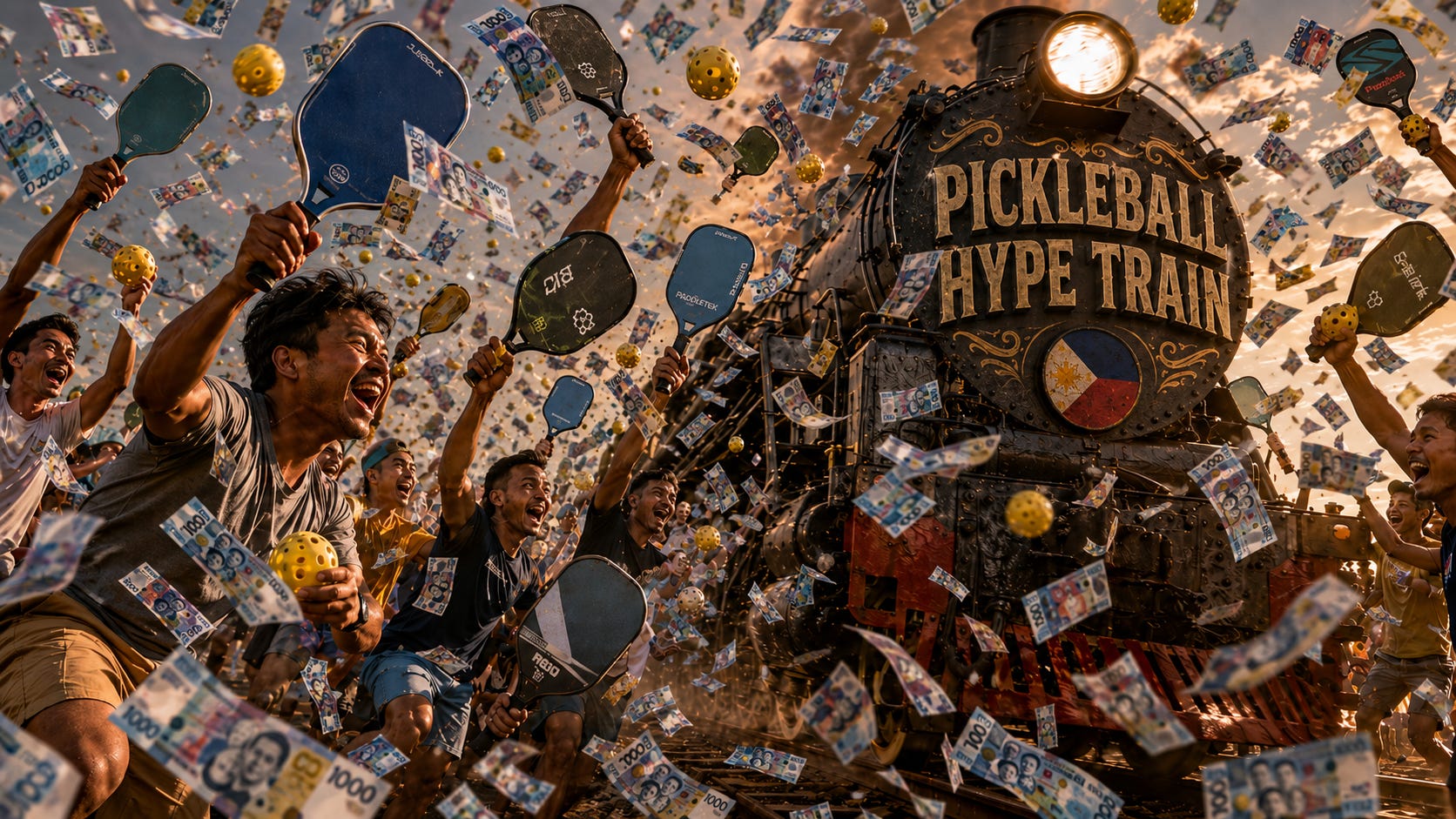
Pickleball is the fastest-growing sport in the world right now. In the United States alone, there are over 13 million players.
Resorts, malls, and subdivisions across the Philippines are already setting up courts. Big names (like Manny Pacquiao) are spending money on it.
Love it or hate it pickleball is here to stay. Don’t miss out on this golden opportunity, just choose your cash cow below!
Tournaments
This is the option Pacquiao chose, just like what he did with basketball he’ll do the same with Pickleball.
Don’t be intimidated! Let Pacquiao get the cream of the crop players. There’s still a lot of opportunities from smaller tournaments.
From amateur tournaments to community based tournaments the opportunity is still endless. Here’s an example (I won’t name drop the organizers).
Organizer A charge ₱500 entry fee per head, get 40 participants for (a small tournament), that's already ₱20,000 in your pocket before the event even starts. Plus there's no cap on how many players can join.
On top of that, most Philippine pickleball tournaments don't even give out cash prizes — medals, paddles, and shirts are the standard. The best part? You don't have to pay for those yourself. Sponsors cover them. That means your entry fees are almost pure revenue.
Layer in sponsor deals, food concessions, and merchandise and you've got multiple income streams from a single weekend event.
But move fast — the community is starting to notice cash-grab tournaments and players are getting pickier about where they spend their money. Right now people are still happy to pay for bragging rights. This window won't stay open forever unlike the next one.
Court Rental
Right now there are not enough courts to meet the demand. Just check the Reclub App (most used app to find games), most of the open plays are packed 7 days a week!
Rates in the Philippines currently range from ₱400 per hour on the low end to ₱1,000 per hour on the high end —the quality plus location will be your biggest pricing factor.
A well-maintained court in a good area can easily command the higher rate. Charge per hour, per session, or offer monthly memberships to regulars. The income is predictable and the overhead after setup is low.
This is also a perfect play for landlords and sub-lessors sitting on extra real estate. If you have an idle space turn that liability to an asset by converting it to a pickleball court.
Want to squeeze more out of every square meter? Add a small F&B setup on the side. A simple list of Pocari Sweats, Gatorades, and Sandwiches might even exceed your court rental earnings.
The average open play last for 3 hours.
They get thirsty, they get hungry.
The best advantage a business can get is a starving crowd.
Court Construction
Every new court rental business needs someone to build the court first. That's the opportunity here.
As demand for courts explodes across the country, the need for contractors who actually know how to build a proper pickleball court is growing just as fast. We're not just talking about painting lines on a basketball court.
A proper setup includes the right flooring, the correct court dimensions and spacing, proper net installation, good lighting for evening play, and an effective roof to make sure that the rainy season won’t get in your way.
Court construction in the Philippines currently ranges from ₱150,000 on the low end (which we don't recommend) all the way up to ₱800,000 for a full premium build. The sweet spot sits somewhere in the middle where you get the right mix of quality and price without cutting corners that will cost you later.
If you're already in construction, renovation, or any related trade, this is a natural extension of what you already do. If you're not, partnering with someone who is and specializing in court builds is a legitimate niche.
The clients are already there. The courts just haven't been built yet.
Open Play Organizer
Not everyone wants to join a tournament. Most pickleball players just want to show up, play a few games, meet new people, and go home happy.
As an open play organizer, you book the court, set the schedule, collect the fees, and manage the flow of players in and out.
It sounds simple because it is. But simple doesn't mean small.
A well-run open play session with 20 players at ₱200 per head is ₱4,000 for a few hours of work. Run it three times a week and you're looking at ₱48,000 a month from one court. The real value you're building here isn't just the income; it's the community.
A loyal group of regular players is an audience you can eventually sell tournaments, merchandise, and the next one.
Coaching
Every new player who picks up a paddle have no idea what they're doing. That's your market.
Pickleball coaching in the Philippines is still wide open. There are not enough coaches to meet the number of beginners flooding the courts every week. If you can play at a decent level and explain the game well, you can charge for it.
Private one-on-one sessions, group clinics, and beginner bootcamps are all formats that work.
Want to go bigger? Add kids and youth clinics to your roster.
Build a reputation as the go-to coach in your area and the referrals will do the selling for you.
How much? That’s the beauty of coaching, you decide.
Paddle Retail
Every single pickleball player needs a paddle. There is no playing without one.
The challenge right now is that good paddles are hard to find locally. Most players are either ordering online from international sellers or buying overpriced ones from resellers with no after-sales support.
That’s the gap you fill.
Paddles range from budget-friendly options like the Vatic Pro at around ₱2,000–₱3,500 all the way up to premium brands like Selkirk’s Boomstick which can go for ₱12,000–₱21,000 a piece. Buy at wholesale, sell at retail, and the margin takes care of itself.
A player upgrading from a beginner paddle to a mid-range one is a sale you can make over and over again as the community grows.
You can also source blank paddles from manufacturers, slap your own branding on them, and sell them as your own product line. It sounds simple but this route takes more capital, more logistics, and more quality control. It’s not for everyone but if you pull it off, you own a brand — not just a reseller account.
You don’t need a physical store to start. An online shop or even a Facebook page can get you your first sales.
Shoes & Clothes Retail
Paddles get all the attention but the real repeat purchase in any sport is apparel.
Players buy one paddle and upgrade every year or two. But shoes wear out, shirts get sweaty and old, and people always want to look good on the court. Pickleball-specific court shoes are a real thing.
Brands like K-Swiss, Asics, and New Balance all have dedicated court shoe lines that pickleball players swear by.
On the apparel side, moisture-wicking shirts, shorts, and skirts designed for court movement are your bread and butter. The barrier to entry here is low. You can start with a small curated collection, sell online, and test what moves before going bigger.
And just like paddles, if you have the appetite for it, you can eventually private label your own pickleball apparel line and build a brand around the community you're already part of.
Content Creation
Every business on this list needs content.
Tournament organizers need hype videos.
Court rental owners need social media posts.
Coaches need reels that show off their skills.
Paddle and apparel sellers need product shots and reviews.
If you know how to make content, you are sitting on a skill that the entire pickleball industry in the Philippines needs right now.
Start a pickleball-focused page, grow an audience of players and enthusiasts, and suddenly you become the media arm of the community. Brands will pay to reach your audience. Courts will pay you to shoot their facilities. Coaches will pay you to document their sessions.
You don't need a big following to start getting paid; you just need to be the most consistent creator in a space that barely has any yet.