

The solar boom in the Philippines is happening right now.
When electricity bills are through the roof, a rooftop solar panel system feels like a no-brainer; especially for businesses that consume far more electricity than your average residential home.
The solar solution became less of a luxury option and more of a mandatory option now for businesses looking to increase their bottom line.
With 82% of the population expressing interest in solar panel systems, it’s safe to say that this industry is growing fast.
That’s when the government steps in.
The Department of Trade and Industry (DTI) just announced it is preparing rules that would require mandatory government certification for solar panel systems sold in the Philippines. Every panel, every inverter, every battery, every charge controller, every cable.
Everything.
The DTI’s Bureau of Philippine Standards (BPS) is drafting the order, and it covers both residential and commercial solar installations. The proposal is still in consultation, but the direction is clear.
Everything needs to go through DTI.
The real question is, “why?”
Why does the DTI suddenly care about your solar panels?
The DTI will tell you that the push for regulation is about protecting consumers. And to be fair, the problem they’re pointing to is real.
Right now, solar products in the Philippines have zero mandatory certification requirements. Anyone can import a cheap panel from overseas, slap it on your roof, and call it a day. That means the only certification it needs is the one from its country of origin.
This has flooded the market with substandard equipment. Inverters that don’t meet international standards. Batteries that overheat. Installations done by uncertified workers with no formal training.
Meralco has already reported fires caused by faulty solar installations that didn’t follow safety standards.
Their own data shows that one in three rooftop solar units in their franchise area are unregistered “guerrilla installations” — no permits, no inspections, no paper trail.
That is a legitimate problem.
Legitimate enough to put DTI and Meralco on the same page.
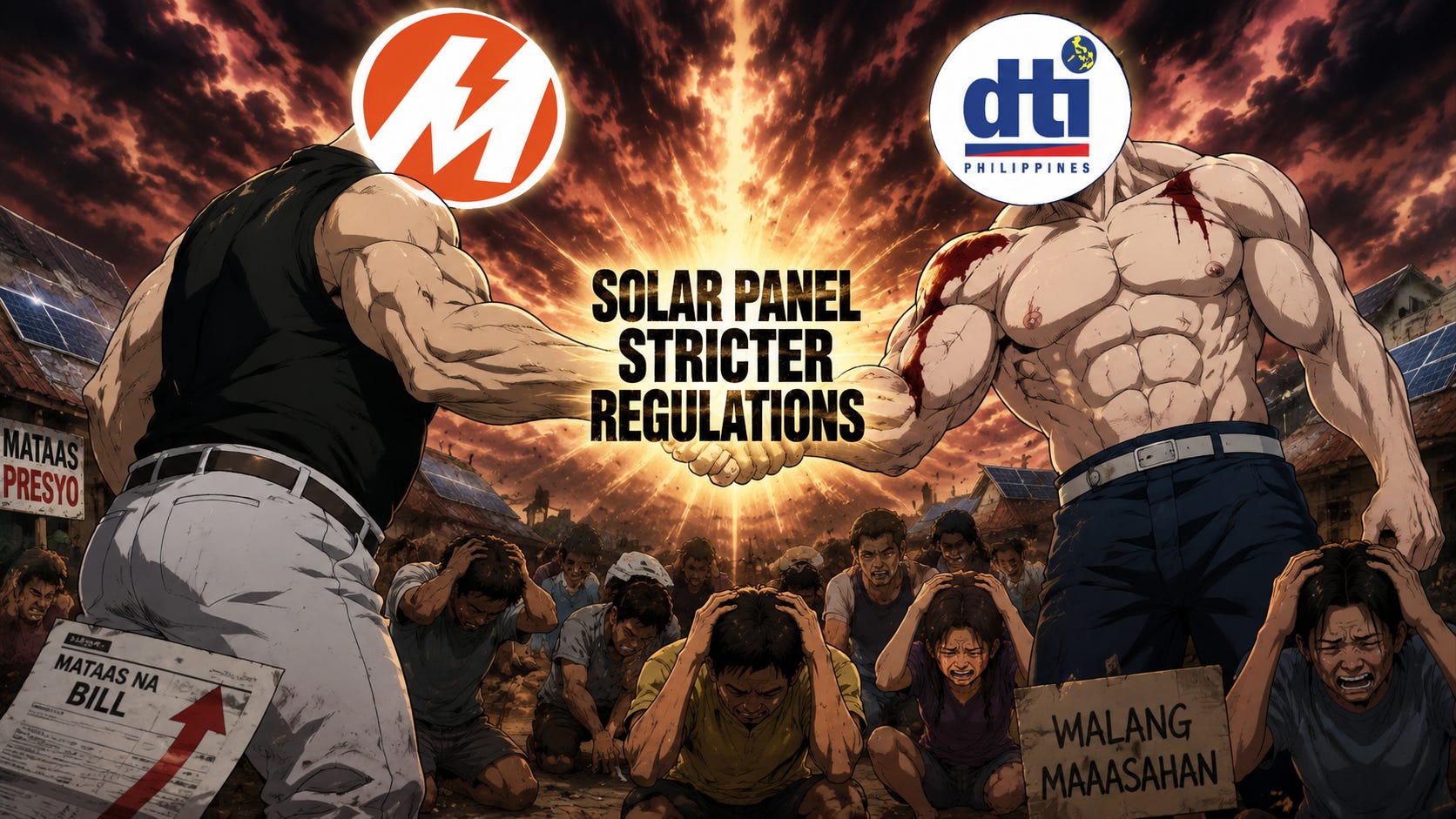
Meralco Cares??
Meralco is the one pushing hardest for these stricter regulations. At a recent Senate hearing, Meralco’s VP for Utility Economics Lawrence Fernandez personally urged the DOE and the DTI to adopt stricter standards for solar equipment and formal qualifications for solar installers.
They want uncertified products off the market. They want guerrilla installations regulated. They want the government to step in and clean up the industry.
Safety First yes, but what about conflict of interest?
Here’s why.
Meralco is also building their own solar farm. A big one. The Meralco Terra Solar Project. A 3,500-megawatt solar and battery storage facility in Bulacan and Nueva Ecija worth ₱200 billion. It is one of the largest solar projects in Southeast Asia, and it is currently under construction.
Everything…coincidence.
The country’s largest power distributor, which has been charging Filipino businesses some of the highest electricity rates in the region for decades, is now lobbying the government to regulate the same rooftop solar industry that is threatening to reduce their customers’ dependence on the grid all the while simultaneously building a massive solar farm of their own.
Monopolies need to keep being monopolies, because why not.
Never Ending Government Corruption means Never Ending Taxes and Red Tapes.
Now let’s talk about the other beneficiary in this story.
Fact: Certification doesn’t come free.
Under the DTI-BPS certification scheme, every solar product that enters the Philippine market will need to go through a process that includes application fees, processing fees, inspection fees, and testing fees. And those fees aren’t small. Public comments on the DTI-BPS consultation have already flagged certification costs reaching ₱10,000 or more per application — and that’s before you factor in testing and inspection costs charged by third-party bodies.
The DTI-BPS already runs mandatory certification schemes for 111 product categories in the Philippines. Solar panels are about to become the newest addition to that list.
Don’t get me wrong.
Product certification isn’t inherently evil. Standards exist for a reason.
It’s just when the same government agency drafting the rules also collects the fees, and the loudest voice asking for those rules happens to be a ₱200 billion corporation with it’s worth asking who this regulation is really designed to protect.
Those Already Got Their Solar Installed Aren’t Safe..Yet.
The new rules are aimed at products entering the market going forward but that doesn’t mean your existing setup is untouchable.
If your system was installed by an uncertified installer, uses equipment that doesn’t meet international standards, or was put up without the proper permits, you’re sitting on a liability.
Think about it.
No building permit means no legal protection if something goes wrong. The guerrilla install that saved you money upfront could end up costing you far more down the line.
The Best Time to Do It is NOW.
Once mandatory certification kicks in, expect solar product prices to go up. The cheap, uncertified panels flooding the market today will either disappear or get more expensive once they’re required to meet Philippine standards.
If solar has been on your business plan for a while, now’s the best time to put it on top of your checklist.
Get quotes now.
Talk to certified installers now.
Buy before the market adjusts to the new rules.
The math on solar can only get worse from now.